Quantum Art Demonstrates Quantum Algorithm for Electromagnetic Wave Propagation in Partnership With Leading Israeli Governmental Research and Development Agency
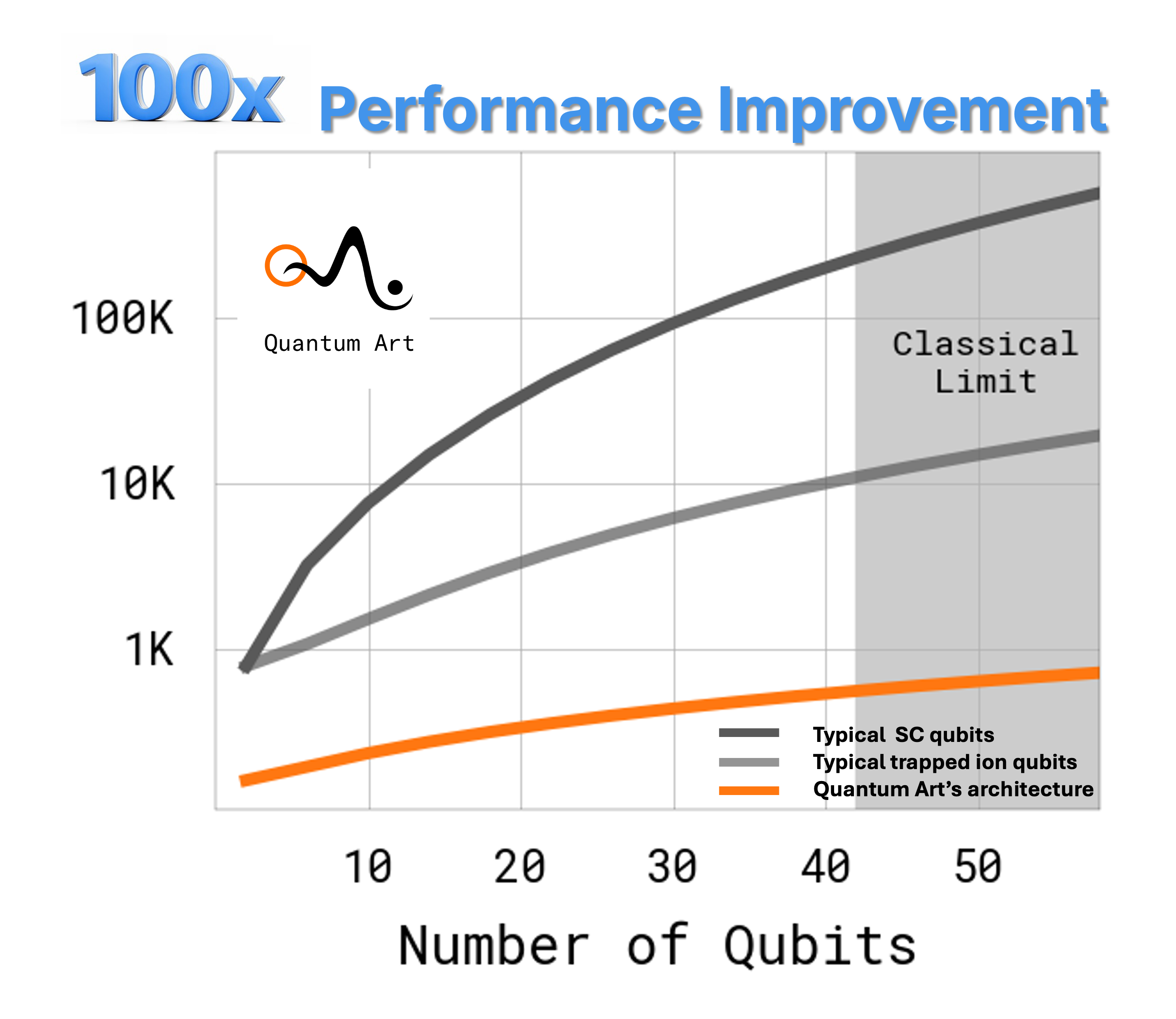
Today we announce the results of a joint project with a leading Israeli governmental research and development agency. The project focuses on developing quantum algorithms for modeling electromagnetic wave propagation and demonstrates the potential of quantum computing to address complex physical problems at scales beyond the practical limits of classical computing.
As part of the project, an algorithm was developed to simulate electromagnetic wave propagation generated from multiple sources across volumes spanning tens of cubic kilometers, at centimeter-level resolution and beyond. This capability enables highly accurate wireless coverage planning and improves the reliability of mission-critical communication systems.
Models at this level of detail require on the order of ~10¹⁸ sampling points. Classical supercomputers struggle to efficiently process problems of this magnitude, forcing trade-offs between coverage area, model accuracy, computation time, and energy consumption.
The algorithms were developed based on Quantum Art’s architecture and its multi-qubit gate capabilities, enabling efficient solutions of partial differential equations (PDEs) used in large-scale wave propagation modeling. PDEs form the foundation of models across numerous scientific and engineering domains, including communications, aerospace, automotive, finance, and defense.
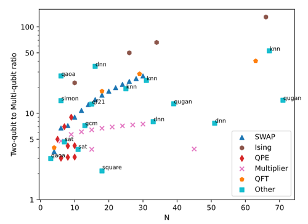
By compressing complex operations into fewer computational steps, the multi-qubit architecture reduces quantum circuit depth and enables advanced algorithms to run efficiently even on systems with a relatively small number of qubits. Benchmarking results showed more than a 100× performance improvement compared to a leading superconducting quantum computing platform, and over a 10× improvement compared to another trapped-ion approach.
Prof. Roee Ozeri, Chief Scientific Officer at Quantum Art:
"When attempting to model complex wave behavior at this scale and centimeter-level resolution, classical systems impose trade-offs that limit either accuracy or coverage. The quantum algorithms we developed preserve high precision at scales that were previously impractical, and this advantage is expected to grow as quantum hardware continues to advance."
Due to the exponential scaling of quantum computation, a grid containing approximately 10¹⁸ sampling points can be represented using only ~60 qubits, placing simulations of this scale within reach of near-term quantum systems.